
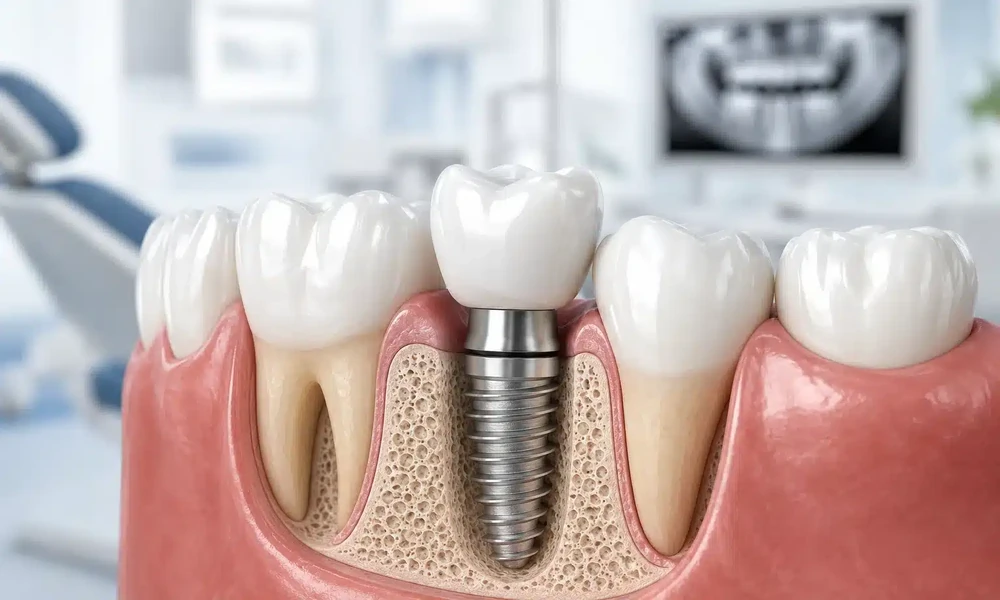
A chipped, discolored, worn, or damaged tooth can affect more than the appearance of your smile. Depending on the condition of the tooth, it may also affect how you bite, chew, or feel when using that tooth.
When patients begin researching cosmetic dental treatment, two options often come up: veneers and dental crowns.
They can sometimes produce similar-looking improvements, but they are designed for different situations. The key question isn’t simply which one looks better. It is how much of the natural tooth is healthy and what the tooth actually needs.
Understanding that distinction can help patients have a more useful conversation with their dentist before choosing a restoration.
Start With the Tooth, Not the Treatment
It can be tempting to choose a treatment based on photographs of other people’s smiles.
However, two teeth that look similar from the outside may have very different underlying conditions.
One tooth may have relatively healthy structure but an aesthetic concern such as discoloration. Another may have a large filling, significant decay, a crack, or substantial structural damage.
Those situations may require very different approaches.
This is why a dental examination should come before deciding between a veneer and a crown.
When a Veneer May Be Considered
A veneer is a thin restoration designed to cover the front surface of a tooth.
It is generally associated with aesthetic improvements such as:
- Discoloration that does not respond well to whitening
- Minor changes in tooth shape
- Small chips
- Certain spacing concerns
- Cosmetic imperfections
- Improving the appearance of selected front teeth
Because veneers are primarily used to change the visible appearance of a tooth, they are generally considered when the underlying tooth structure is sufficiently healthy.
The goal is to improve the appearance while preserving as much healthy natural tooth structure as appropriate.
When a Crown May Be More Appropriate
A dental crown covers the tooth more extensively.
This makes crowns useful when a tooth requires additional structural support rather than simply an improvement in appearance.
A crown may be considered when a tooth has experienced:
- Significant decay
- A large filling
- Substantial fractures or cracks
- Major loss of tooth structure
- Weakness following certain dental treatments
In these circumstances, covering and protecting the remaining tooth may be an important part of treatment.
The decision is therefore often less about veneers versus crowns and more about cosmetic improvement versus structural protection.
A Simple Way to Understand the Difference
Consider two patients.
Patient A has a relatively healthy front tooth that is noticeably discolored and slightly uneven in shape. The tooth is structurally sound, but the patient is unhappy with its appearance.
The dentist may discuss an aesthetic treatment such as a veneer if it is clinically appropriate.
Patient B has a heavily restored tooth with a large filling and a significant amount of missing tooth structure. The patient may also be experiencing sensitivity or discomfort.
In this situation, simply covering the visible front surface may not provide the structural protection the tooth needs. A crown may be considered instead.
The visible concern can look similar, but the underlying dental problem is very different.
What About a Chipped Tooth?
This is where the decision can become less straightforward.
A small chip may sometimes be treated with bonding or another conservative cosmetic approach.
A larger fracture, particularly one involving a significant amount of tooth structure, may require a different restoration.
The location and extent of the damage matter.
For example, a small cosmetic chip on a healthy front tooth is very different from a tooth that has fractured around a large existing filling.
Rather than assuming that every chipped tooth needs a crown or veneer, a dentist can evaluate the damage and explain the available options.
Crowns and Root Canal-Treated Teeth
Another situation where crowns commonly enter the conversation is after root canal treatment.
A tooth that has undergone root canal therapy may require additional protection depending on the amount of remaining tooth structure and the location of the tooth.
In appropriate cases, a crown can help restore the tooth’s shape and provide coverage.
This is another example of why the structural condition of the tooth matters when selecting a restoration.
Patients who are considering a crown following root canal treatment can discuss whether dental crowns in Cambridge are appropriate for their particular situation.
Appearance Still Matters With Crowns
Choosing a crown doesn’t mean accepting an artificial-looking tooth.
Modern dental restorations can be designed with attention to factors such as:
- Tooth color
- Shape
- Size
- Proportion
- Relationship with neighboring teeth
- The overall appearance of the smile
For visible teeth, these aesthetic considerations can be an important part of treatment planning.
A restoration therefore needs to address both the health of the tooth and the patient’s expectations about appearance.
Veneers Are Not Simply “Better” Because They Are Cosmetic
Patients sometimes assume that a veneer is automatically the more conservative or desirable option because it is associated with cosmetic dentistry.
But veneers still involve altering the tooth to prepare it for the restoration, and they are not appropriate for every tooth.
If a tooth lacks sufficient structural strength, an aesthetic veneer may not address the underlying problem.
The dentist’s priority should be determining what the tooth needs first and then selecting a restoration that is appropriate for that condition.
What Your Dentist Will Consider
Before recommending a veneer or crown, your dentist may look at several factors.
Amount of Healthy Tooth Structure
How much natural tooth remains can strongly influence the treatment choice.
Existing Restorations
Large fillings or previous dental work can affect the strength and condition of the tooth.
Tooth Location
Front teeth and back teeth experience different functional demands, which can influence restoration planning.
Bite
The way your teeth meet can affect the forces placed on a restoration.
Cosmetic Goals
If appearance is an important concern, your dentist can discuss the expected shape, shade, and overall appearance of the restoration.
Long-Term Maintenance
Both the restoration and the underlying tooth require appropriate care after treatment.
What If You Are Mainly Concerned About Your Smile?
Not every aesthetic concern requires a veneer or crown.
Depending on the cause of the problem, other options may include:
- Professional teeth whitening
- Dental bonding
- Orthodontic treatment
- Tooth contouring
- Replacement of an old restoration
For example, if the primary concern is tooth discoloration and the teeth are otherwise healthy, your dentist may discuss professional teeth whitening in Cambridge before considering more extensive cosmetic treatment.
The most appropriate option depends on what is causing the concern and how much change is actually needed.
A Cosmetic Consultation Can Help You Compare Your Options
Patients often arrive at a dental consultation thinking they already know which treatment they want.
That’s understandable, especially after researching veneers and crowns online.
But the consultation is an opportunity to step back and ask a more important question:
What does my tooth actually need?
A dental clinic in Cambridge, ON can assess the condition of the tooth, discuss your aesthetic goals, and explain whether a veneer, crown, bonding, whitening, or another treatment may be appropriate.
Rather than choosing a restoration based solely on its appearance, a professional evaluation can help you understand the balance between preserving healthy tooth structure, restoring function, and achieving the smile you want.
Veneers vs Crowns: The Decision Is Personal
There isn’t one restoration that is right for every patient.
A veneer may be appropriate when the primary concern is the appearance of an otherwise healthy tooth.
A crown may be more appropriate when the tooth has lost significant structure and requires greater coverage and protection.
And sometimes, neither is the first option.
That is why treatment planning should begin with the condition of the tooth rather than a predetermined choice of restoration.
Ready to Find Out Which Option Is Right for Your Tooth?
If you’re considering veneers or crowns and aren’t sure which treatment makes sense for your situation, schedule a consultation with Cambridge Centre Dental Care.
During your appointment, your dentist can examine the tooth, discuss your aesthetic and functional concerns, and explain the available treatment options based on the condition of your natural tooth.
Book a cosmetic or restorative dental consultation before choosing a veneer or crown. A personalized assessment can help you understand what your tooth needs and what approach may provide the right balance of appearance, function, and long-term care.
Common Questions Patients Ask
Are veneers or crowns better for improving appearance?
Both can improve the appearance of a tooth, but they serve different purposes. Veneers are generally focused on the visible surface, while crowns provide more extensive coverage and can also address structural concerns.
Can a damaged tooth get a veneer?
It depends on how much healthy tooth structure remains and the nature of the damage. A dentist needs to assess the tooth before determining whether a veneer is appropriate.
Does a crown always mean the tooth is badly damaged?
Not necessarily. Crowns may be recommended for several reasons, including significant structural loss, large existing restorations, fractures, or protecting certain teeth after root canal treatment.
Can I get veneers just because I don’t like the shape of my teeth?
Possibly, depending on the condition of the teeth and the nature of the desired change. Your dentist can also discuss more conservative alternatives where appropriate.
How long do veneers and crowns last?
Their lifespan can vary depending on factors such as oral hygiene, biting forces, the condition of the underlying tooth, and regular dental care. Your dentist can discuss expected maintenance based on your specific restoration.
The Takeaway
Veneers and crowns can both play a role in improving a smile, but they are not interchangeable treatments.
Veneers are generally associated with aesthetic changes to the visible surface of a tooth, while crowns provide more extensive coverage when a tooth requires greater structural support.
The right choice depends on the condition of the tooth, your bite, your oral health, and what you want to achieve.
If you’re unsure which option is right for you, start with an examination rather than a treatment decision. A professional consultation can help you understand your options before you commit to a restoration.

Comments are closed.