
Wisdom teeth are the last set of molars to develop, usually appearing between the ages of 17 and 25. While some wisdom teeth emerge without causing problems, others become trapped beneath the gums or grow in an unusual position.
Understanding the difference between impacted and erupted wisdom teeth can help patients recognize potential problems, understand available treatment options, and know when to seek a dental evaluation.
What Are Erupted Wisdom Teeth?
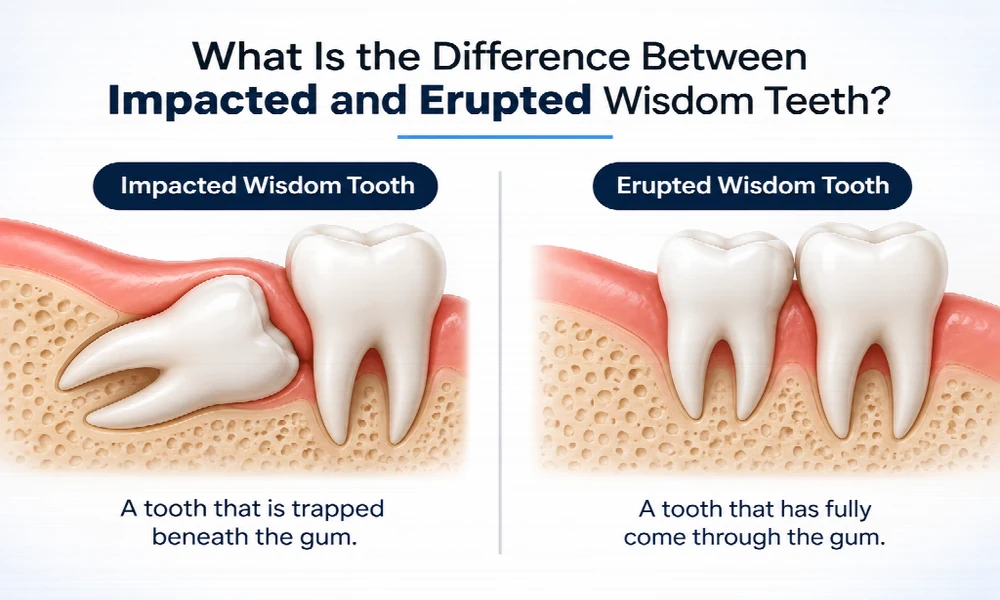
Erupted wisdom teeth are teeth that have successfully emerged through the gum tissue and become visible in the mouth.
When there is enough space in the jaw, wisdom teeth may grow into a healthy position without causing discomfort. However, erupted wisdom teeth can still create problems, especially when they are difficult to clean or grow at an angle.
Possible concerns include:
- Food and bacteria becoming trapped around the teeth
- Gum inflammation
- Tooth decay
- Gum disease
- Pressure on neighboring teeth
Regular dental examinations help determine whether erupted wisdom teeth are healthy and properly positioned.
What Are Impacted Wisdom Teeth?
Impacted wisdom teeth are teeth that cannot fully emerge through the gums because they are blocked by other teeth, bone, or soft tissue.
Impaction can occur when there is insufficient space in the jaw or when a wisdom tooth develops at an unusual angle.
Common signs include:
- Pain or pressure toward the back of the jaw
- Swollen or tender gums
- Difficulty opening the mouth
- Bad breath or an unpleasant taste
- Repeated gum infections
- Discomfort when chewing
Some impacted wisdom teeth cause no noticeable symptoms. Dental X-rays can help identify their position and determine whether treatment is necessary.
Impacted vs. Erupted Wisdom Teeth: Key Differences
The main difference is whether the wisdom tooth has successfully emerged through the gum tissue.
- Erupted wisdom teeth: Have emerged through the gums and are visible in the mouth.
- Impacted wisdom teeth: Remain partially or completely trapped beneath the gums or within the jawbone.
Both types can develop complications, but impacted teeth may require more complex treatment depending on their position and relationship to nearby structures.
When Should Wisdom Teeth Be Removed?
Not every wisdom tooth needs to be removed. A dentist or oral surgeon may recommend removal when there is recurring infection, decay, damage to neighboring teeth, cyst formation, or another clinically significant problem.
For patients experiencing pain, swelling, or repeated infections, wisdom teeth removal may be recommended. The treatment approach depends on the tooth’s position, development, and overall condition.
In some cases, an impacted wisdom tooth may require surgical removal. A dentist will assess how deeply the tooth is positioned and whether it is covered by gum tissue or bone. Depending on the situation, treatment may involve tooth extractions to prevent further complications.
Damaged or infected teeth may also affect surrounding teeth and oral health. When tooth loss occurs and replacement is necessary, dental implants may provide an option for restoring the appearance and function of missing teeth.
An examination and appropriate imaging can help determine whether removal is necessary and what the procedure may involve.
Can Wisdom Teeth Affect Sleep?
In some cases, oral health problems can contribute to discomfort that affects sleep. However, impacted wisdom teeth are not an established direct cause of obstructive sleep apnea.
Sleep apnea is a separate condition involving repeated interruptions in breathing during sleep. Patients experiencing loud snoring, gasping during sleep, or persistent daytime tiredness may benefit from an evaluation.
Learn more about availablesleep apnea treatment options and how dental professionals may help manage certain forms of sleep-disordered breathing.
Get Your Wisdom Teeth Evaluated
Whether wisdom teeth are impacted or fully erupted, monitoring their development is important for maintaining oral health. Some teeth can remain without causing problems, while others may require treatment to prevent complications.
If you experience jaw pain, swelling, or recurring discomfort near your wisdom teeth, consider scheduling an evaluation with a dental professional. Early assessment can help identify potential problems and determine the most suitable treatment.

Comments are closed.