
Newborn hiccups are incredibly common—and while they may look dramatic or sound a little alarming to new parents, they’re usually harmless. Most babies experience hiccups within the first few weeks of life, and these tiny diaphragm spasms often come and go without any discomfort. Still, when hiccups interrupt feeding or sleep, it’s natural to want quick and safe ways to soothe your little one.
In this guide inspired by the gentle, trusted care philosophy of Johnson’s Baby, you’ll learn seven proven, pediatrician-recommended methods to calm your baby’s hiccups—plus helpful prevention tips to keep them from returning.
Why Do Newborns Get Hiccups?
Hiccups occur when your baby’s diaphragm— the muscle beneath the lungs—contracts involuntarily. This sudden contraction causes the vocal cords to close quickly, producing that familiar “hic” sound.
Common triggers include:
- Overfeeding
- Swallowing air during feeds
- Sudden changes in temperature
- Excitement or mild irritation of the diaphragm
While harmless, hiccups sometimes interfere with feeding or sleep. That’s where these proven techniques come in.
7 Proven Ways to Soothe Your Newborn’s Hiccups Fast
1. Pause Feeding and Give Baby a Gentle Break
If hiccups begin mid-feeding, your baby’s stomach may be too full or they may have swallowed excess air. Pause the feeding for a few minutes and let your newborn relax.
A short break gives the diaphragm time to reset and helps reduce pressure in the stomach—often stopping hiccups naturally.
2. Burp Your Baby Slowly and Gently
One of the most effective hiccup remedies is simply to help your baby release trapped air. Burping can ease pressure on the diaphragm and soothe spasms quickly.
Try any of these burping positions:
- Over-the-shoulder upright burping
- Sitting baby on your lap and supporting the head
- Laying baby across your lap on their tummy
Gentle, slow pats work best—avoid tapping too firmly.
3. Offer a Pacifier to Relax the Diaphragm
Sucking on a pacifier encourages steady breathing and relaxes the diaphragm muscles. Many newborns stop hiccupping within minutes after sucking rhythmically.
This method works especially well for babies who get hiccups when they’re excited or overstimulated.
4. Keep Baby Upright After Feeding
Holding your baby upright for 20–30 minutes after feeding helps prevent both hiccups and spit-ups. Gravity aids digestion and prevents air bubbles from rising, reducing the likelihood of diaphragm irritation.
This is especially helpful for babies who hiccup frequently during evening feeds.
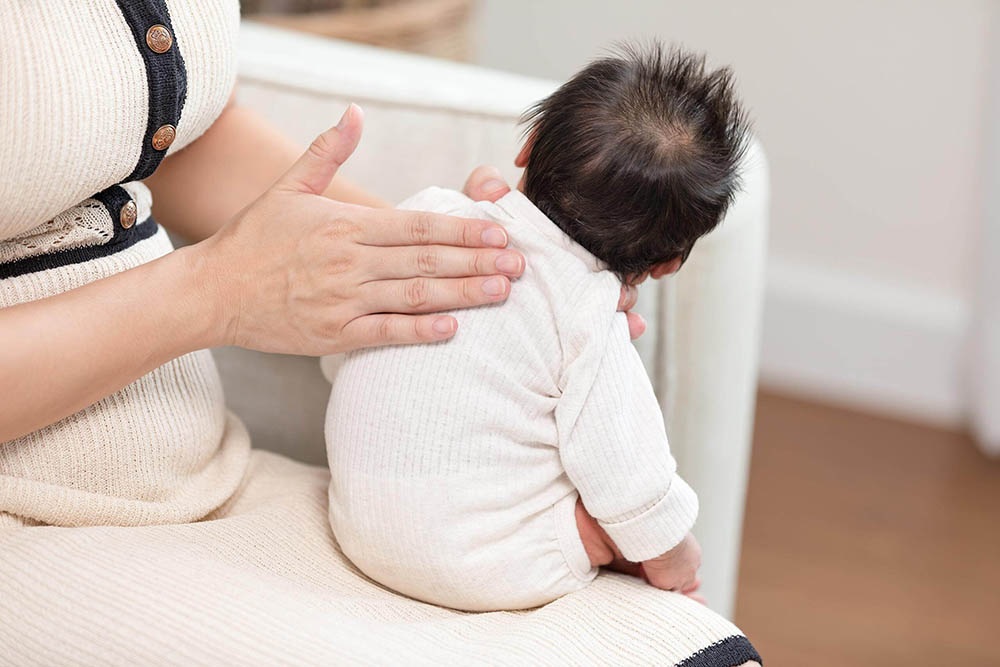
5. Gently Rub or Pat Baby’s Back
Slow, circular motions on the back help your baby relax and can reduce diaphragm spasms. This soothing technique works well during bedtime or naptime hiccups.
Avoid quick or rough movements—calming, rhythmic motions are key.
6. Try Smaller, More Frequent Feedings
If your newborn is prone to hiccups during or after feeds, adjusting the feeding schedule may help. Smaller amounts of milk at more frequent intervals prevent the stomach from becoming overly full—one of the biggest triggers of hiccups.
This strategy works for both breastfed and bottle-fed babies.
7. Use Anti-Colic Bottles or Slow-Flow Nipples
Bottle-fed babies may swallow more air if their nipple flow is too fast or if the bottle design allows excess air bubbles.
Switching to slow-flow nipples or anti-colic bottles can dramatically reduce air intake, helping prevent hiccups before they start. Make sure the bottle nipple stays filled with milk during feeding to avoid gulping air.
Bonus: Prevention Tips to Reduce Future Hiccups
While hiccups can’t be eliminated completely, these simple habits can help minimize episodes:
Feed before baby gets too hungry
Crying increases air intake, leading to more hiccups.
Watch for early hunger cues
Rooting, sucking motions, and hand-to-mouth gestures indicate readiness for feeding.
Maintain a calm feeding environment
A relaxed baby feeds more slowly and swallows less air.
Avoid intense play immediately after feeding
Gentle cuddling is better than bouncing or tummy time right after meals.
Use proper latching techniques
For breastfeeding babies, ensuring a deep latch reduces air intake.
For more detailed information on this topic, explore Newborn’s Hiccups for trusted, research-based tips.
When Should You Be Concerned?
In most cases, newborn hiccups are normal and require no medical attention. However, speak to your pediatrician if:
- Hiccups cause distress or crying
- They interfere with feeding every day
- They last more than an hour consistently
- Your baby seems uncomfortable or spits up excessively
These may indicate reflux or another underlying issue.
Final Thoughts
Newborn hiccups are a natural part of early development, but knowing how to soothe them can bring comfort to both you and your baby. By using gentle feeding techniques, encouraging calm breathing, and minimizing air intake, you can ease your baby’s hiccups quickly and prevent frequent episodes.
With the right soothing strategies—and the trusted support of Johnson’s Baby—you can navigate this tiny challenge with confidence and care.

Comments are closed.