
Category

Wellness

Category

Meditation is often pictured as a person sitting in silence, trying to empty the mind. That image can make the practice seem distant to someone who finds stillness difficult. Yet mindful awareness does not depend on shutting out experience. It can begin by becoming more attentive to sound, breath, sensation, and movement.

An immersive approach gives those elements a deliberate place. Instead of treating the senses as distractions, it uses them as pathways into the present. The practice may then feel more vivid, embodied, and approachable.

Beyond Silence Alone

Traditional seated meditation is valuable, but it is only one doorway. A guided voice can help attention settle. Carefully chosen music can create rhythm and atmosphere. Breathwork can make internal sensation easier to notice, while gentle movement lets a restless body participate rather than resist.

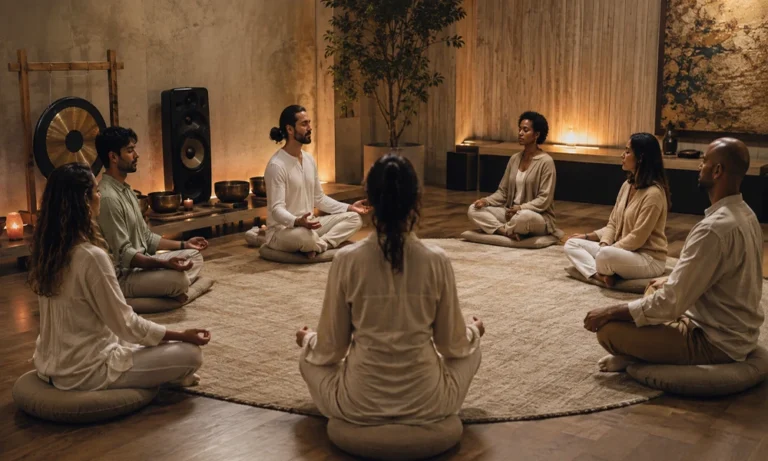
This wider format comes into focus through open meditation, where Op e n brings meditation, music, breathwork, and movement into one contemporary mindfulness experience. Together, these elements can make practice feel less like withdrawing from life and more like meeting it fully.

Immersion does not mean constant stimulation. Strong experiences use sound, guidance, and movement with restraint. Silence may appear between musical phrases, and stillness may follow motion. Contrast lets attention become more sensitive without becoming overwhelmed.
Article image

Why an Immersive Format Can Feel More Accessible

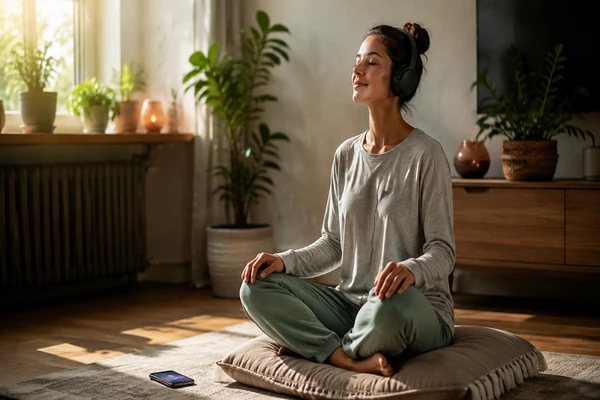
Attention wanders. That is normal, not a sign of failure. A sensory cue gives the mind somewhere clear to return: the texture of an exhale, the weight of the body, a low note, or the instructor’s next phrase. Different anchors may suit different people and days.

Research offers context without proving that one format is best. A study involving novice meditators found that a brief guided session affected aspects of attention for some participants, while individual differences influenced the result. The National Center for Complementary and Integrative Health notes that meditation and mindfulness have been studied for stress, anxiety, depression, pain, and sleep, but evidence varies by practice and study quality.

Immersive meditation is therefore a way of shaping an experience, not a guaranteed treatment. It may support wellbeing, but it should not replace appropriate medical or mental health care.

How the Elements Work Together

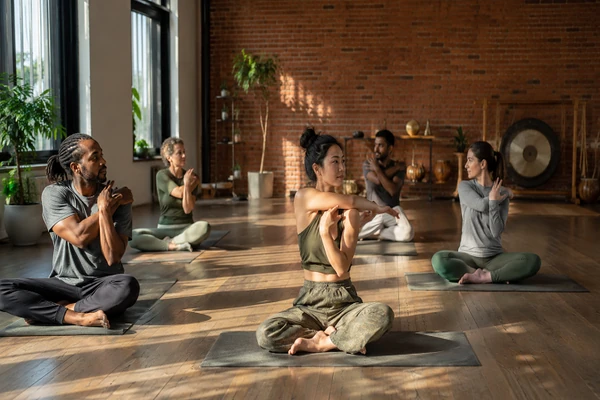
A session may begin by noticing contact with the floor, chair, or cushion. The voice then guides attention toward natural breathing. Music can establish a steady pace without demanding analysis. A small movement-rolling the shoulders, opening the hands, or gently swaying-may reveal tension that stillness had hidden.
Article image

Breath adds an internal rhythm. Movement gives that rhythm a visible expression. Sound holds the atmosphere, and guidance keeps the sequence coherent. When the session returns to stillness, sensations may feel clearer because attention has travelled through several channels.

No layer needs to dominate. Music should not become a performance, movement need not resemble a workout, and breathing should remain comfortable. The purpose is attention, not intensity.

A Practical Beginning

A beginner can start with ten minutes and one intention: stay curious about what is happening. Choose a position that feels stable rather than impressive. Let the first breaths remain natural. Follow the guidance without forcing the body to match an exact pace.

When thoughts appear, notice them and return to the strongest available anchor. That might be breath in one moment and sound in the next. If closing the eyes feels uneasy, keep them softly open. If a technique causes dizziness, panic, pain, or distress, stop and return to ordinary breathing.

A session need not produce calm to be worthwhile. Sometimes immersion reveals fatigue, agitation, or emotion that was already present. Meeting that experience without immediate judgment is part of the practice.

Article image

Choose the Experience the Day Needs

Different moments invite different forms. A quiet morning may suit spacious seated meditation. A tense afternoon may call for breath and gentle movement. An evening practice might use music to support the transition away from work.

The useful question is not, “Which method is perfect?” It is, “What will help attention become available now?” This flexibility makes consistency more realistic because the practice can adapt without losing its purpose.

Carry Presence Beyond the Session

Meditation matters most when its quality of attention enters ordinary life. A person may notice tension sooner during a conversation, take one conscious breath before replying, or feel the ground while walking between tasks. These small moments turn practice into a lived skill.

Op e n offers guided experiences designed to awaken body and mind through multiple paths. Explore its meditation collection and choose a session that feels welcoming today. The doorway may be sound, breath, movement, or stillness; what matters is learning to arrive.

A bottle of vitamins sits on the kitchen counter. It was purchased with good intentions. For the first week, everything goes according to plan. Then work becomes busy. A few early mornings turn into several. The bottle slowly moves toward the back of a shelf and stays there. That situation is surprisingly common.

The problem is not always motivation. Sometimes people are trying to solve a nutritional question before understanding what the actual question is. Conversations around health supplements rarely start with products in a clinical setting. More often, they begin with routines. What does a normal day look like? And sometimes the answer is not very normal at all.

Sometimes The Details Sound Small

A person mentions they rarely eat breakfast. Another casually says they drink very little water during the day. Someone else talks about constantly changing work shifts. These details may not seem important while describing them.

Yet they often help explain patterns that have been developing for months. A nutritional discussion can move from one small observation to another.

Nothing dramatic.

Just pieces slowly fitting together.

And sometimes the detail that sounded least important at the beginning ends up receiving the most attention.

The Goal Is Not To Fill A Cabinet

Walk through any pharmacy and there are rows of products covering entire walls. The selection can feel endless. Yet more products do not automatically create a better plan.

A shelf full of unopened bottles is proof of that. The conversation is usually more useful when it focuses on purpose.

  • Why is something being considered?
  • Does it fit current needs?
  • Does it make sense alongside existing habits?

Those questions tend to produce better answers than simply asking what happens to be popular at the moment.

Looking At The Bigger Picture

The discussion around health supplements becomes more useful when it starts with the person rather than the product.

A supplement bottle reveals very little on its own. A daily routine reveals much more. The early commute. The skipped meals. The late night work sessions. The exercise habits that disappeared after a busy season at work. The weekends that look completely different from weekdays.

Those details tell a story. And when the story becomes clearer, decisions about nutrition tend to make more sense as well. Sometimes the answer involves supplements. Sometimes it does not. Either way, the conversation usually starts long before anyone reaches for a bottle.

The battle against cancer is one of humanity’s most difficult tasks. And while a lot of money is spent on pharmaceutical drugs or surgeries, there are alternatives that could help prevent this nasty disease.

In this article, we’ll talk about forest bathing benefits and most importantly the forest bathing-cancer link, in which spending time outdoors could actually fight off sickness.

What is Forest Bathing?

Shinrin-Yoku is what the Japanese have called “forest bathing” for ages now. It involves going out into the forest, and basking in the beauty of the trees around you.

As one of the healthiest, longest living cultures, it turns out they were onto something. Forest bathing, or forest therapy, is about healing your mind, body, and emotions with nature.

And the benefits are not just “woo woo” but actually grounded in science. So let’s cover how nature therapy is so good for your wellbeing:

The Disease Fighting Benefits of Forest Bathing — (Cancer Prevention and More)

You may have heard of the benefits of nature therapy like forest bathing. For instance, you can improve your connection with the world around you.

When you’re surrounded by nothing but forest, you can let your mind wander, opening up creative channels you didn’t know you possessed.

And of course, there’s the psychological effect of being surrounded by greenery in a world where most of our buildings are gray and muted.

Even the placebo effect can describe why it feels so good to engage in forest therapy.

But aside from these subjective truths, there are scientific reasons that trees are so good for you and help against cancer. Let’s review just a few of them:

  • Mood Enhancement – Even just 20 minutes of forest bathing has been shown to improve your emotional mood.
  • Less Depression – The release of serotonin while in nature helps alleviate depression and dark thoughts.
  • Lower Stress Levels – The stress hormone cortisol is lowered when you’re forest bathing, removing stress from the body.
  • Greater Focus – You can concentrate on less, and therefore focus more, when in natural surroundings.
  • Fighting Cancer – Trees actually help fight cancer in a number of ways, and even prevent it. Trees aid your immune system, and even “kill” cancer. More on that in a minute.
  • Lower Blood Pressure – Heart disease can be helped or prevented by spending time in forests.

How Does Forest Bathing Help Cancer?

Stress is one of the silent killers of our generation. And there are plenty of studies proving how higher stress levels lower our immune system and our body’s ability to fight off cancer.

With that information alone, it’s clear to see how forest bathing can help cancer. But there’s an even more powerful, direct way that it helps defeat cancer.

Cancer’s Worst Nightmare: Forest Bathing and NK Cells

Our body has something called Natural Killer (NK) cells. They are responsible for killing harmful microbes in our system. In fact, they also control and limit the growth of tumors, such as those caused by cancer.

As you might imagine, the more active these NK cells are, the more effectively you can fight off diseases.

Research found that people who spent time in the forest had increased NK cell activity.

But why? Well, it has to do with essential oils in trees called Phytoncides.

Phytoncides — The Forest’s Secret Weapon Against Cancer

Phytoncides are volatile compounds that organically come from trees. You can come into contact with these by simply being near trees or smelling the aroma from trees.

These anti-inflammatory agents increase your body’s NK cell count, as well as other cancer-fighting proteins.

And that’s how trees help against cancer, in addition to everything else mentioned above.

How to Go Forest Bathing

“Bathing” in a forest or group of trees is simple:

  1. Pick a spot around trees where you feel comfortable and safe without needing a phone.
  2. Sit, stand, or lie down by a tree that interests you.
  3. Close your eyes and listen to the sounds, notice the smells, and feel the air around you.
  4. Open your eyes and visually enjoy the trees you see in the forest.
  5. Touch the trees — their bark, leaves, or other parts of the tree.
  6. Breathe deeply, and focus on how good you feel.

And that’s it. You can do this for 20 minutes, 2 hours, or however long you like.

Protect Your Health Today With Forest Bathing

When it comes to forest bathing and cancer, science has spoken. It’s a free, natural, beautiful way to protect yourself against humanity’s most cruel disease. So why not try forest bathing today? You have nothing to lose, and everything to gain.