Archive

2024

Browsing

Several dentists recommend the use of fluoride mainly for growing teeth due to its critical importance in oral hygiene. It involves painting a fluoride gel or varnish onto the teeth so that the tooth can gain some strength on its enamel layer and reduce vulnerability to decay. Family dental practices recommend fluoride treatments to children and adolescents since teeth are in the process of developing. In addition to reducing sensitivity and easing gingivitis, it can be especially helpful during this age in regard to cavity protection and general oral care.

How Does Fluoride Help the Enamel?

Fluoride has the ability to ruminate teeth enamel which is the outer covering of the teeth. Even though the enamel consists of the hardest tissue in the human body, it can still experience demineralization by being attacked by acids from foods, beverages, or bacteria which can cause the partial breaking of enamel and make teeth more susceptible to decay. 

This action of fluoride is quite important in reversing this process because fluoride strengthens the enamel through the provision of the right minerals. This is especially true if they are still in their developmental stages where, as everyone knows, children’s teeth are still growing.

How and in what way does Fluoride protect teeth from getting cavities?

Dental caries are one of the most frequent health complications affecting children and adolescents. Fluoride treatments decrease the chances of getting cavities by strengthening of the teeth structure to withstand attacks from acids by bacteria. 

Dentists

Despite keeping cavities away or demineralization of enamel, which could eventually form cavities, fluoride also reduces the instances of extensive decay that can cause more complex dental problems. In the present investigation, fluoride treatment has been proven as a valuable approach in reducing the tendency of new teeth to develop cavities.

When Should Fluoride Treatments Be Administered?

Fluoride treatment should be conducted for children at least twice in 6 months after the age of 2, according to the American Dental Association. However, children with an increased likelihood of tooth decay may need more frequent treatment. 

Consultation with the child’s dentist is important when deciding how often the fluoride application should be done for every child because of the differences in individuals. There are always benefits in maintaining a schedule of checks to ensure that the child receives their fluoride treatment as their teeth grow.

Are There Any More Advantages Of Fluoride Treatment?

Fluoride treatments are particularly useful for making the tooth enamel stronger, for prevention of cavities, and for cases where the teeth are sensitive. Growing up, children may develop a strange sensitivity to eating hot or even cold foods and drinks. 

It is with relief that this discomfort may be reduced with the help of fluoride since the structure of the teeth can be strengthened and cannot be influenced by any external factors. Furthermore, fluoride treatments that require little or no more than a simple paint-on brush application are very easy and painless the children will not feel uncomfortable going through a dental procedure.

Conclusion

Fluoride treatments are very important in dental healthcare for growing teeth. Fluoride consequently boosts the enamel, reduces cavities, and provides several other benefits for children and adolescents’ healthy teeth. Fluoride treatments can be efficiently used in child dental care practice together with proper hygiene to ensure that children grow up with strong healthy teeth. Periodic dental visits allow follow-up on the progress and make sure that children get the correct amounts of fluoride coatings characteristic of their age.

Vascular surgeons have a crucial role. They create and manage dialysis access. It’s a task that demands skill and expertise. This role is as vital as the three rivers that converge, causing leg pain in their furious meeting. Just as the leg pain three rivers necessitate careful navigation, so too does the journey through dialysis access creation and management. Let’s delve into the significant role these surgeons play in this life-saving procedure.

Understanding Dialysis Access

Patients with kidney failure often require dialysis. This process removes waste and excess fluid from the blood. Dialysis access is the site on a person’s body where the blood is removed and returned during the treatment. This access point needs to be strong. It needs to handle a high volume of blood flow. Dialysis access is typically created in the arm or leg.

Vascular Surgeons: The Gatekeepers of Dialysis Access

Vascular surgeons are experts in blood vessel systems. They are responsible for creating and maintaining dialysis access. They ensure that the access point is functioning correctly. They also manage any complications. Much like a gatekeeper, they ensure the path is clear for the life-saving dialysis treatment.

Vascular Surgeons

The Path of Skill and Expertise

Creating dialysis access is a delicate process. It requires a deep understanding of the body’s vascular system. Vascular surgeons train for years to master this process. They study the ebb and flow of blood through the body, just like the way rivers move across the land. Their careful navigation of these systems ensures the best possible outcomes for patients.

Comparing Dialysis Access Types

Type of Access Location Advantages
Arteriovenous (AV) Fistula Arm Long-lasting, less likely to get infected
Arteriovenous (AV) Graft Arm or Leg Can be used sooner after surgery
Vascular Access Catheter Neck Can be used immediately

Moving Forward

The role of vascular surgeons in dialysis access creation and management is essential. They are the gatekeepers, the skillful navigators of the body’s rivers of blood. Their expertise and dedication ensure that life-saving dialysis treatment is possible for those who need it the most.

Respiratory protection has been a crucial component of workplace safety for centuries. From simple cloth masks to sophisticated full-face respirators, the design and functionality of these devices have evolved significantly over time. As technology and industrial processes advanced, so too did the need for more effective methods of protecting workers from harmful airborne contaminants. In this article, we’ll explore the evolution of respiratory protection and how today’s advanced equipment helps safeguard workers in various industries.

1. The Origins of Respiratory Protection

The need for respiratory protection can be traced back to ancient times. Early examples include rudimentary cloths soaked in water or herbal solutions to filter out dust and smoke. One of the earliest documented uses of respiratory protection comes from ancient Rome, where miners would cover their mouths with animal bladders to avoid inhaling harmful dust while mining for lead.

By the 19th century, industrialization brought about new challenges in air quality. As factories and mines became more prevalent, so did exposure to hazardous dust, chemicals, and gases. Early respirators were developed to protect workers from these dangers. One notable example is Lewis P. Haslett’s “Lung Protector,” patented in 1849, which filtered dust from the air using a one-way valve and moistened wool.

2. Advancements in the 20th Century

The early 20th century saw significant advancements in respiratory protection, particularly during World War I. The use of chemical warfare in the form of mustard gas and chlorine gas required the development of gas masks to protect soldiers. These gas masks, featuring filters made of activated charcoal, were designed to protect against toxic gases, and their design laid the foundation for modern respirators.

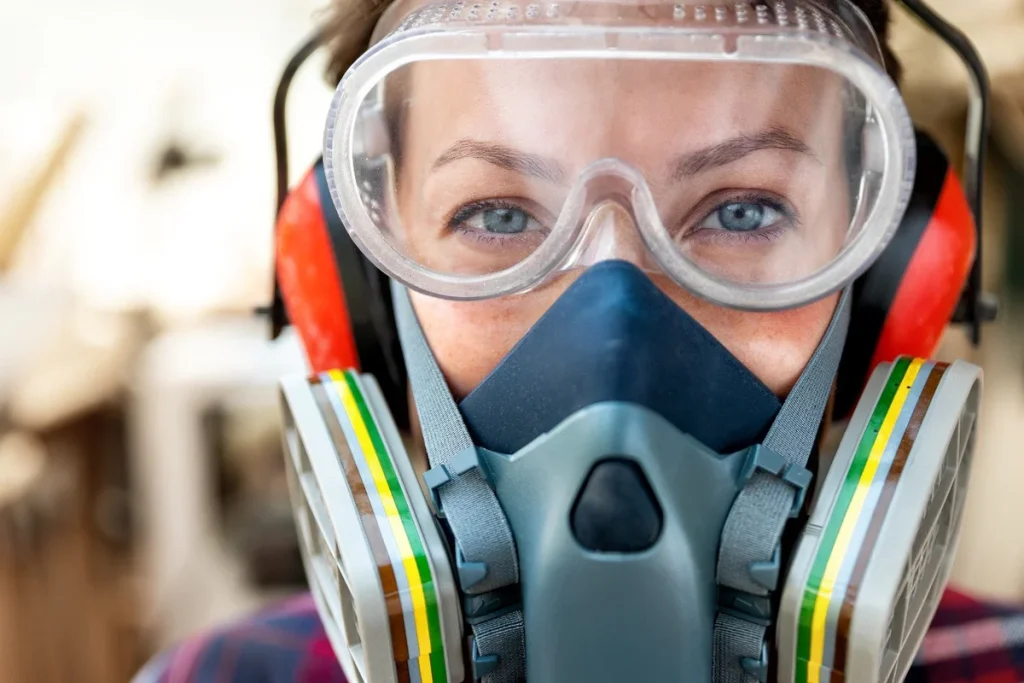
As industries such as mining, construction, and manufacturing expanded, so did the need for respiratory protection. By the mid-20th century, industries began adopting half-mask respirators , which provided protection for the nose and mouth. These respirators were particularly useful for environments with dust and particulate matter, but they lacked eye protection and were less effective for environments with hazardous fumes or gases.

3. The Development of Full-Face Respirators

While half-mask respirators provided adequate protection for certain tasks, more hazardous environments required a higher level of protection. This led to the development of full-face respirators, which protect not only the respiratory system but also the eyes and face from chemical splashes and toxic gases. These advanced respirators became widely used in industries such as chemical manufacturing, firefighting, and emergency response, where comprehensive protection was needed.

Full-face respirators are designed with a tight seal around the entire face to prevent the ingress of contaminants. They are often equipped with replaceable filters or cartridges that can be tailored to specific hazards, such as organic vapors, acidic gases, or particulates. These respirators have become the standard for many industries where workers are exposed to high levels of airborne contaminants.

4. Modern Innovations in Respiratory Protection

In recent years, innovations in respiratory protection have focused on improving comfort, fit, and filtration efficiency. One such innovation is the development of powered air-purifying respirators (PAPRs), which use a battery-powered fan to pull air through filters, reducing breathing resistance and providing a constant flow of purified air. PAPRs are particularly useful in environments where prolonged use of tight-fitting respirators can cause discomfort or fatigue.

Another modern advancement is the incorporation of smart technology into respiratory protection. Some respirators now feature integrated sensors that monitor air quality in real-time, alerting the wearer if dangerous levels of contaminants are detected. This allows workers to take immediate action in case of sudden changes in their environment.

5. The Future of Respiratory Protection

As industries continue to evolve and new hazards emerge, respiratory protection will undoubtedly continue to advance. Future innovations may focus on enhancing the integration of respiratory protection with other forms of personal protective equipment (PPE), such as helmets, visors, and communication systems.

In addition, as awareness of occupational health grows, there will likely be an increased emphasis on respiratory protection in sectors where it has been underutilized. With ongoing research and development, respiratory protection will continue to play a critical role in safeguarding workers in a wide range of industries.

Conclusion

From the simple cloth masks of ancient times to the advanced full-face respirators of today, respiratory protection has come a long way in ensuring worker safety. As new challenges and hazards arise in various industries, respiratory protection will continue to evolve, incorporating the latest technologies and innovations to keep workers safe from harmful airborne contaminants.

For those working in environments with dust or particulate matter, half-mask respirators and other modern options provide an effective barrier, while full-face options ensure comprehensive protection in more hazardous conditions.

The cannabis business has exploded in recent years with the development of a range of new products including some uniquely affecting cannabinoids. Tetrahydrocannabivarin (THCV) is one cannabinogen of great interest. Particularly THCV gummies have grown rather popular because of their unique qualities and possible health advantages. Discover THCV THC Gummies for a unique blend of benefits, combining relaxation and energy-boosting effects in one product. But why are THCV gummies becoming so sought after and what is driving their increase?

Unusual Cannabinoid with Different Effects

Unlike its more well-known relative, THC, THCV presents a range of effects appealing to a larger audience. Although THC is well-known for its psychotropic effects and capacity to provide a “high,” THCV offers a more clear-headed experience. THCV interacts with the endocannabinoid system of the body in such a way as to assist control energy, mood, even hunger. THCV gummies present a special choice for users seeking the advantages of cannabis without the intoxicating properties.

Possible medical advantages of THCV

cannabis

With possible health advantages different from those of other cannabis compounds like CBD and THC, THCV is attracting more attention. The fact that THCV gummies may help with weight control is among the most important factors driving their increasing appeal. Unlike THC, which can induce appetite—often referred to as the munchies—THCV has been demonstrated to reduce hunger. For those trying for a natural way to control weight or prevent overindulgence, THCV gummies especially appeal. Furthermore thought to improve focus and energy levels, THCV is a popular choice for daytime use.

Suitable for Daily Use Non-Psychoactive

The fact that THCV gummies provide the advantages of cannabis without the euphoric effects is another factor driving their increasing appeal. Many people search for a natural supplement to aid with stress, worry, or concentrate, but they do not desire to go through the strong connected with THC. THCV gummies offer a means to enjoy cannabis’s therapeutic properties while keeping clear-headed and functional all through the day. This makes them perfect for those who wish to include cannabis into their wellness regimen without sacrificing their output.

The distinctive advantages, non-psychoactive character, and handy mode of consumption of THCV gummies help to explain their popularity. THCV gummies have become a common choice on the cannabis market as more people search for natural ways to control weight, anxiety, and energy levels. Explore and Discover THCV THC Gummies for a balanced and enjoyable experience that complements your lifestyle.