
Archive

January 2025

Browsing

Visiting the dentist for the first time can be a mix of curiosity and concern. I understand that the unfamiliar setting might feel a bit overwhelming. In “What To Expect During Your First Dental Visit: A Beginner’s Guide,” I aim to ease those feelings. cosmetic and family dentistry focuses on more than just the appearance of your teeth. It’s about creating a foundation for lifelong oral health. During this first appointment, you will meet your dentist and learn about the importance of regular dental check-ups. You will experience basic procedures like a gentle cleaning and an examination. These help in spotting any potential issues early on. By understanding what happens during this visit, you can approach future appointments with ease. This guide will shine a light on the process, helping you make informed decisions about your dental care. Let’s embark on this journey towards a healthier smile together.

Meeting Your Dental Team

During your first visit, you’ll meet the dental team. They include the dentist, dental hygienist, and sometimes an assistant. The team works together to ensure you are comfortable. You will notice that they are eager to answer questions and address any concerns you may have.

Initial Examination

Your dentist will start with an initial examination. This involves checking your teeth, gums, and mouth. They look for signs of cavities, gum disease, and other potential issues. This examination helps in creating a personalized treatment plan if needed. The examination is usually painless and brief, setting the stage for further steps.

Understanding Dental X-Rays

X-rays might seem intimidating, but they play a crucial role in dental care. They provide a detailed view of the structure of your teeth and jaw. Dental X-rays help in detecting problems not visible during the initial examination. The process is quick and uses minimal radiation. The American Dental Association offers more insights on the safety and importance of dental X-rays.

Routine Cleaning

Routine cleaning is a major part of your first visit. The hygienist will gently remove plaque and tartar build-up from your teeth. This process involves scaling and polishing. Scaling removes hardened deposits, while polishing smooths your teeth. This helps in reducing the risk of cavities and maintaining a bright smile.

Discussing Oral Health Habits

The dental team will discuss proper oral hygiene practices with you. They may offer tips on brushing and flossing techniques. This is a good time to ask questions about dental products, like toothpaste or mouthwash. Understanding these habits is essential for maintaining oral health at home.

Creating a Treatment Plan

If any issues are detected, your dentist will work with you to create a treatment plan. This plan outlines recommended treatments, timelines, and costs. It is important to discuss all options and feel comfortable with the proposed plan. Transparency and communication with your dentist are key.

Step Action Time Taken
Meet the Team Introduction and discussion of concerns 5-10 minutes
Initial Examination Check teeth and gums for issues 10-15 minutes
X-Rays Capture images of the inner structure 5 minutes
Routine Cleaning Scaling and polishing of teeth 20-30 minutes
Oral Health Discussion Tips on brushing, flossing, and products 5-10 minutes
Treatment Plan Outline of further steps if needed 5-10 minutes

Final Thoughts

Your first dental visit sets the stage for your oral health journey. Understanding each step helps reduce anxiety and builds confidence. Remember, regular check-ups are essential in preventing issues and maintaining a healthy smile. If you’re curious about more intricate details of dental care, the National Institute of Dental and Craniofacial Research offers valuable resources. Your dental team is there to support you every step of the way. Together, we look forward to a future of healthy and happy smiles.
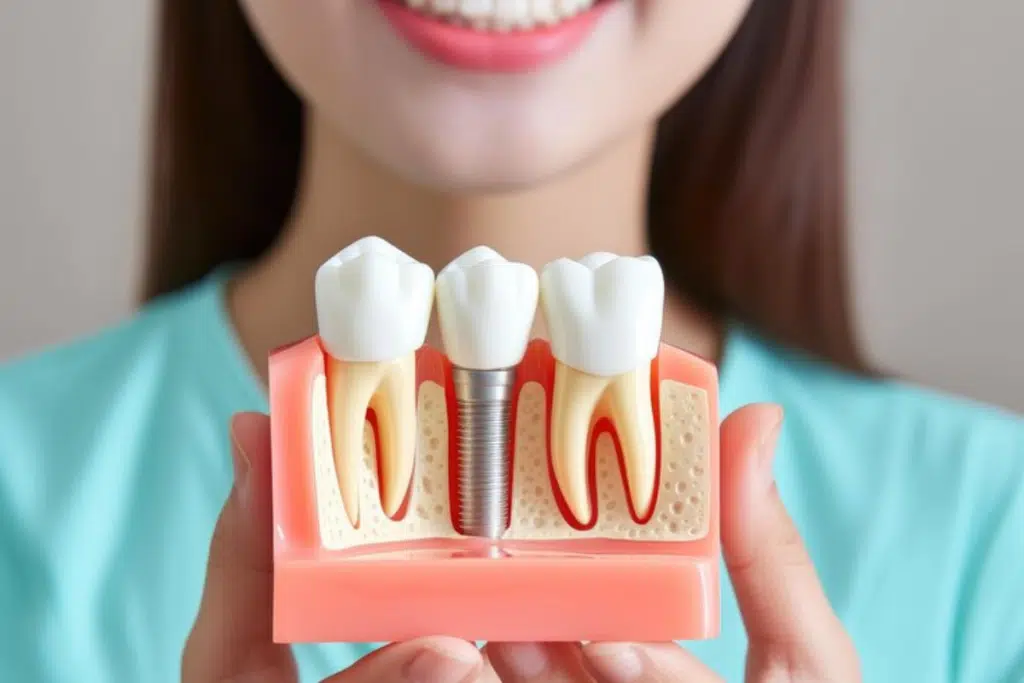
A dental implant is a surgical operation that buries a tooth root replacement or titanium post into the jawbone. The implant supports dental prostheses, including crowns, dentures, and bridges, enhancing your comfort and attractiveness and encouraging the best oral health. 

Most patients have numerous questions concerning the dental implant surgery’s complex and protracted healing phase. 

Always giving patients full answers to any queries or concerns they may have, an implant dentist Houston uses a patient-first approach to providing dental treatments in a compassionate and kind environment.

5 common Questions about dental implant Recovery

  1. Can I eat straight after surgery?

Before you take out the gauze sponges put in your mouth, you will have to wait roughly one hour following surgery. Still, you have to be rather cautious about the things you eat. Just eat soft and watery foods for the first day following your surgery. Particularly hot foods and beverages should be avoided as well. Furthermore, keep in mind that you should not sip from a straw for twenty-four hours. Following all these guidelines will help your mouth heal correctly.

  1. Will Healing Be Difficult?

The degree of pain you experience will rely on the scope of your procedure. To help with pain, you will be able to utilize over-the-counter drugs, including ibuprofen and acetaminophen. Should your dentist believe it is essential, they could potentially provide you with a stronger pain reliever prescription. Always follow directions on any painkillers. Pain ought to go with time. If you find it worsening after five to seven days, contact your dentist to inform them of the situation.

  1. How Can I maintain clean teeth?

Regular tooth brushing is as vital now as it has always been. After 24 hours following your procedure, you can resume brushing your teeth. Steer clear of the surgical site’s vicinity. Every so often, you might also rinse your mouth with light salt water—one-fourth teaspoon in a glass of water. At least two weeks following your surgery, avoid using mouthwash or a rinse using hydrogen peroxide.

  1. What recovery time does dental implant surgery have?

Your particular dental health and the position and count of the implants will determine the recovery period following a dental implant surgery. For instance, recuperation is probably going to take a little longer if you require several implants in various parts of your jaw.

Usually, rehabilitation following a dental implant operation takes four weeks to six months. 

  1. Will the Surgical Site Bleed?

Minor bleeding of the surgical site after the dental implant installation operation is somewhat common. Your dentist has thus covered the region with gauze. For the first hour, you should keep biting down on them firmly to stop bleeding. Do not rinse or spit since this can aggravate more bleeding. If the seeping is heavy, take a moistened ordinary tea bag wrapped in gauze and cover the bleeding location. Bite down hard for one hour.

Conclusion

Though they demand the same degree of commitment to care as your natural teeth, dental implants are a great long-term fix for restoring your smile and dental functionality. Your implants’ lifetime depends on your strong oral care schedule. Daily brushing and flossing are advised to keep your mouth free of plaque and bacteria and lower the risk of infection or problems surrounding the implants. Regular dental checkups also let your dentist check the condition of your implants, spot any possible problems early on, and offer expert cleaning to preserve the best oral health.

Cosmetic dentistry is very beneficial for patients with dental issues. It changes the lives of many people and improves their routines every day. Cosmetic dentistry gives natural-looking teeth and cures most dental problems within a few weeks. It also makes exceptional dental restorations and treatments.

Cosmetic dentists use various procedures to restore the natural smile and teeth. Patients can consult a cosmetic dentist in Wheaton, IL, for the best cosmetic dentistry for their mouth, face, and teeth. This blog highlights the major benefits of visiting a cosmetic dentist.

Major benefits of visiting a cosmetic dentist

Cosmetic dentistry is necessary for patients who want a natural smile and good teeth. Here are some benefits of visiting a cosmetic dentist such as:

  1. Enhances oral health of the patients

One of the major benefits of cosmetic dentistry is that it improves aesthetics. It is a treatment to cure severe dental conditions and enhance oral health. Implants can give numerous benefits to the teeth, such as curing facial issues. Patients will get better oral health by choosing cosmetic dentistry.

  1. Helps to fix misaligned teeth

Patients with misaligned teeth must visit a cosmetic dentist to get them fixed. Cosmetic dentists place Invisalign to shift the teeth to the right position. After placing Invisalign for some years, patients will gain a natural smile.

  1. Gives an attractive look

Patients choose cosmetic procedures to get original smiles and teeth. It involves using dental implants, Invisalign, and crowns to enhance the look of the teeth. The good-looking teeth will boost the patients’ confidence and create good expression.

  1. Makes patients feel confident everywhere

Cosmetic procedures aid in restoring the confidence of the patients. They can become more confident in personal and professional fields by getting an appealing smile. Patients can get their dental problems solved, such as missing or chipped teeth, from a cosmetic dentist.

  1. Gives long-term benefits

Traditional dentistry is not as effective as cosmetic dentistry. A cosmetic dentist uses Invisalign, implants, veneers, and other tools to restore the original look of the teeth. These procedures offer long-lasting perks to the mouth and teeth, making the patients confident.

  1. Recover the patients speedily

Those who visit a cosmetic dentist recover speedily. Cosmetic dentistry is a time-saving method to reduce dental issues. Patients who undergo the processes such as teeth whitening and invasive cosmetic bonding need less recovery time. They can gain a perfect smile with the help of cosmetic dentistry.

  1. Solves bite issues

Cosmetic procedures help to cure major bite issues effectively. They can cure dental issues such as misaligning teeth and fix damaged teeth. These procedures also enhance the oral health of the patients and give a better smile to the patient.

  1. Improves speech of the patients

Certain dental issues, such as damaged or misaligned teeth, cause speech problems. Orthodontic procedures and implants improve the patient’s speech. They can get relief from speech problems through implants.

  1. Improves professional life

Employees with an attractive smile leave a lasting impression on everyone in the workspace. They will gain confidence in the work and give amazing results. Employees who undergo cosmetic procedures will gain self-esteem and professionalism in their work.

  1. Cures decayed teeth

Those who suffer from damaged teeth can go for cosmetic dentistry. They can get relief from decaying teeth and a natural smile on their face. Cosmetic dentistry also makes the tooth structure better and healthier.

Cosmetic dentistry transforms a person’s natural smile. Many dental clinics offer the best cosmetic procedures and treatments for various dental issues. A cosmetic dentist can help a person gain a beautiful smile using safe techniques.

People who want to get a permanent solution to restore their oral function and look can go for implant-supported dentures, which are a popular choice. These advanced dental solutions can make your teeth stable and give you a natural look, because of which you can get back the confidence when you smile.

For people with sensitive gums,  traditional dentures can give you discomfort and can be a big problem. If you are looking for a permanent solution to get your smile back, you can get treatments like implant-supported dentures in Norristown, PA.

Soft denture liners are a creative and practical solution that makes sure that you get the best results without any change in functionality. This article helps you to know about the benefits of soft denture lines, how they are placed, and why they may be the perfect choice for people who have sensitive gums.

What Are Soft Denture Liners and How Do They Work?

Soft denture liners are a special extra layer of pliable material that is placed between the hard base of dentures and the gums. These are made from bio-friendly material, which goes well with the patient’s body.

What is the Material and Function

Soft denture liners are normally made from medical-grade silicone or materials like it. These liners cover the gums, which decreases the pressure and irritation that can occur because of solid dentures.

Ideal Patients for Soft Liners

Patients who have sensitive gums just got extractions or have bone loss are the best candidates to get soft denture liners. The liners adapt to the unique contours of the gums, which gives you a better fit.

Long Life and Maintenance

Soft liners give you the best comfort, but they also need proper care. You need to regularly clean your soft liners and get a new one from time to time to make sure they work best and are strong.

The Advantages of Soft Denture Liners for Sensitive Gums

Soft denture liners give you more than just comfort. They make the overall experience of wearing dentures better so that you can live an easy and comfortable life with these soft denture liners.

Better Comfort

The softness of the liners decreases friction, which keeps you safe from sores and irritation. This makes them the best solution for people who have tender or healing gum tissues.

Better Stability and Fit

Soft liners fix the surface of the gums and make sure you have a better fit so that there is less motion of gums and you can chew your food more easily.

Therapeutic Benefits

Soft liners can decrease stress on sore or damaged gum tissues. This can make the healing process faster, and because of this, they are an excellent choice for healing periods.

Comparing Soft Denture Liners with Hard Liners

It is important to understand the differences between soft and hard liners so that you can make better decisions about your oral health care. The differences lie in their materials, application, and durability. 

Material Characteristics

Hard liners are made of solid acrylic, but soft liners give you a flexible and soft surface that can fulfill the special needs of a person.

How They Are Applied 

Hard liners are best for people who have healthy gum tissues, but soft liners are fit for people who need extra comfort and safety, so you should have proper knowledge before you choose one.

Durability and Changes

Hard lines have a longer life than soft liners, but soft liners can adapt better, which makes them a more practical option for patients who have changing oral conditions.

Is a Soft Denture Liner Right for You?

If you want to get soft denture liners, you should know about your unique oral health needs and lifestyle choices, such as your budget and long-term goals, to get the best results possible from them.

Custom Fit and Talking to A Dentist

A dental professional checks your gum structure and denture fit to tell you about the best solution that you can get for the best comfort and function.

Budget and Long-Term Benefits

Soft liners may have a higher cost at first, but they have other benefits that cover all the costs, which makes them a better investment.

Maintenance 

It is important to go for regular dental visits and have proper hygiene practices so that your soft denture liners can have a long life and work in the best way possible.

Take the First Step Toward Comfortable Dentures

Soft denture liners are changing the denture experience for people with sensitive gums. They are safe and give you a perfect fit. This makes your quality of life better. Go to your local dental clinic to learn more and know about all the options that will suit your needs.